

Structural engineering in 2026 requires a high degree of mathematical precision, proficiency in advanced computational modeling, and a deep understanding of local building regulations. Whether you are designing seismic-resistant high-rises, assessing aging highway bridges, or engineering large-scale industrial complexes, your resume must communicate your ability to ensure public safety while meeting architectural design constraints.
When engineering firms review resumes, they look for candidates who can demonstrate hands-on experience with finite element analysis (FEA) software, specify design compliance codes, and manage project delivery constraints.
To draft a professional, ATS-optimized CV, you can use our CV Builder. To ensure that key industry terms like SAP2000, Eurocode 3, and load path analysis are indexed correctly, upload your document for a free scan using our ATS Optimizer.
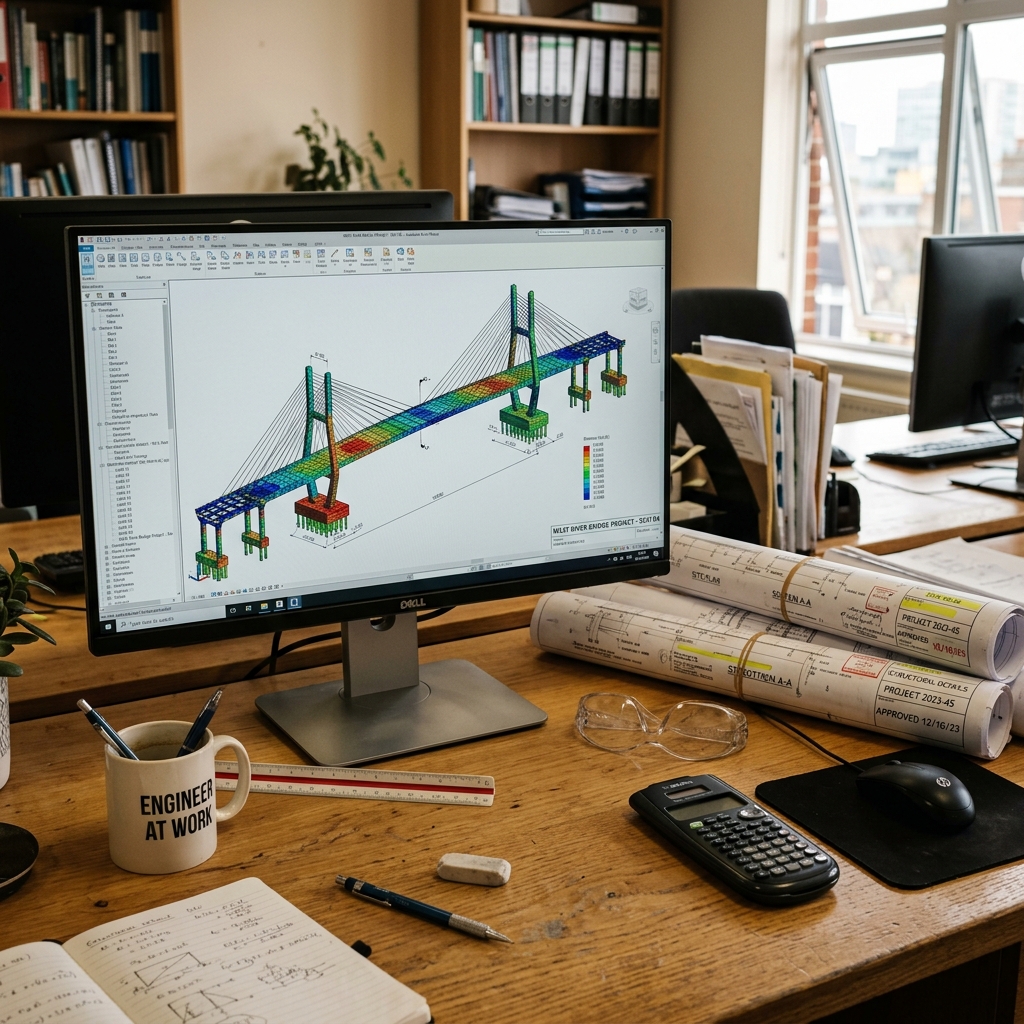
High-Impact Skills Matrix for Structural Engineers
To help recruiters and parsing engines quickly find your technical competencies, structure your skills in a clear, categorized matrix in the top half of your resume.
| Structural Modeling & CAD | Design Codes & Standards | Analysis Methodologies | Materials Expertise |
|---|---|---|---|
| SAP2000 / ETABS | Eurocodes (1 to 9) | Finite Element Analysis (FEA) | Reinforced & Prestressed Concrete |
| AutoCAD Revit / Civil 3D | International Building Code (IBC) | Seismic & Wind Load Calculations | Structural Steelwork |
| STAAD.Pro / Tedds | ASCE 7 / AISC 360 | Static & Dynamic Analysis | Timber & Masonry Design |
| Rhino / Grasshopper | British Standards (BS) | Foundation & Retaining Wall Design | Composite Materials |
Quantifying Your Engineering Value
Avoid listing generic duties such as "Responsible for structural design." Instead, write achievement-oriented bullet points that focus on material volume reductions, design optimizations, cost savings, and regulatory approvals.
- Instead of: "Designed concrete columns and beams for buildings."
- Use: "Designed reinforced concrete elements for a 22-story residential tower using ETABS, optimizing steel reinforcement layouts to reduce raw material costs by £85k while ensuring full compliance with Eurocode 2."
- Instead of: "Performed structural inspections on bridges."
- Use: "Led structural integrity assessments and load rating evaluations for 14 municipal highway bridges, identifying critical shear defects and coordinating repair protocols that extended asset lifespans by 15 years."
- Instead of: "Used software to model structural loads."
- Use: "Developed 3D finite element models (FEA) using SAP2000 to simulate seismic and wind load distributions on a complex steel canopy, reducing design iteration times by 20%."
If you want to practice explaining these technical design decisions in a simulated job interview, you can rehearse with our AI Interview Coach to build confidence.
STAR Method Engineering Project Examples
To demonstrate your technical project management skills, structure your experience descriptions using the STAR (Situation, Task, Action, Result) framework.
Example 1: Wind Tunnel Analysis and Steel Optimization
Situation: During the concept phase of a 150-meter steel lattice tower, wind load simulations indicated high lateral displacement at the upper tiers, exceeding structural deflection limits.
Task: I was assigned to redesign the upper structural steel framing to control wind displacement without increasing the total steel tonnage.
Action: I built a detailed dynamic model in STAAD.Pro and performed wind load calculations in accordance with ASCE 7-22. I ran structural optimizations on the diagonal bracing layouts, replacing heavy standard sections with high-strength structural hollow sections in a modified K-bracing pattern. I coordinated with the fabricator to verify weld feasibility.
Result: The optimized steel truss geometry reduced lateral wind displacement at the top tier by 28%, bringing the structure within allowable limits. The design saved 42 metric tons of steel, reducing project material costs by £65,000 and lowering the carbon footprint of the project.
Example 2: Seismic Retrofitting of a Heritage Structure
Situation: A 90-year-old reinforced concrete municipal building required a comprehensive seismic upgrade to meet current International Building Code (IBC) standards prior to redevelopment.
Task: I acted as the lead structural designer responsible for designing a non-invasive seismic retrofit system that preserved the building's historic facade.
Action: I performed a non-linear pushover analysis using SAP2000 to identify structural weaknesses in the existing shear walls. I designed a retrofitting scheme using carbon fiber reinforced polymer (CFRP) wraps for columns and added localized steel moment frames. I presented the design to the local conservation board and secured structural approval.
Result: The retrofitting plan increased the building's lateral load capacity by 45%, bringing the structure into full compliance with current seismic codes. The project was completed within budget, avoiding the need for demolition and preserving a historic landmark.
Frequently Asked Questions
Which licenses should I highlight on my resume?
For structural engineering roles, a professional license is highly valued. In the UK, highlight your Chartered Engineer (CEng) / MIStructE status. In the US, specify if you hold a PE (Professional Engineer) or SE (Structural Engineer) license. Place these credentials directly after your name in the header (e.g., Jane Doe, CEng MIStructE).
How do I highlight experience with specific building materials?
Detail your material experience in your work bullets by specifying grades and standards. For example, mention "designed using Grade S355 structural steel" or "specified C40/50 concrete mixes." This demonstrates practical, hands-on engineering experience to hiring managers.
Should I list design codes or software on my resume?
You must list both. Software (like SAP2000 or Revit) represents the tools you use, whereas design codes (like Eurocode 3 or AISC) represent the engineering principles and compliance frameworks you apply. Showing proficiency in both proves you are ready to produce compliant designs from day one.
How do I list project scale on a structural engineering resume?
Quantify the scale of your projects using metrics like square footage, height (e.g., "18-story building"), structural span (e.g., "45-meter clear-span steel truss"), or material quantities (e.g., "1,200 cubic meters of concrete"). This helps employers understand the scale of projects you are comfortable managing.
Structural Engineer Resume Checklist
Review your CV against these industry-standard criteria before applying:
- Engineering Credentials in Header: CEng, MIStructE, PE, or SE designations are clearly visible in the contact block.
- Categorized Technical Skills: Software tools and structural design codes are grouped logically.
- Quantified Project Details: Budgets, spans, heights, or volume metrics are included in experience bullet points.
- No Double Quotes inside Blockquotes: Check that any quotes or blockquote examples are free of manual double quotes.
- Three Short Tags: The post's frontmatter contains exactly three short, relevant tags.
- Relative Internal Links: Verify links point correctly to the CV builder, optimizer, and interview coach.
Ready to build your perfect CV?
AlignCV helps you create ATS-friendly CVs and tailored cover letters with AI.
Create Your CV NowWritten by
Mehmet Kerem Mutlu
Founder of AlignCV · Mechanical Engineering Student
Mehmet Kerem is a mechanical engineering student and the founder of AlignCV — an AI-powered career platform built to help every job seeker land their next role with confidence. Combining his engineering mindset with a passion for product development, he designs tools that make CV writing, cover letter generation, and interview preparation faster and smarter. He writes about career strategy, AI in hiring, and the future of work.