

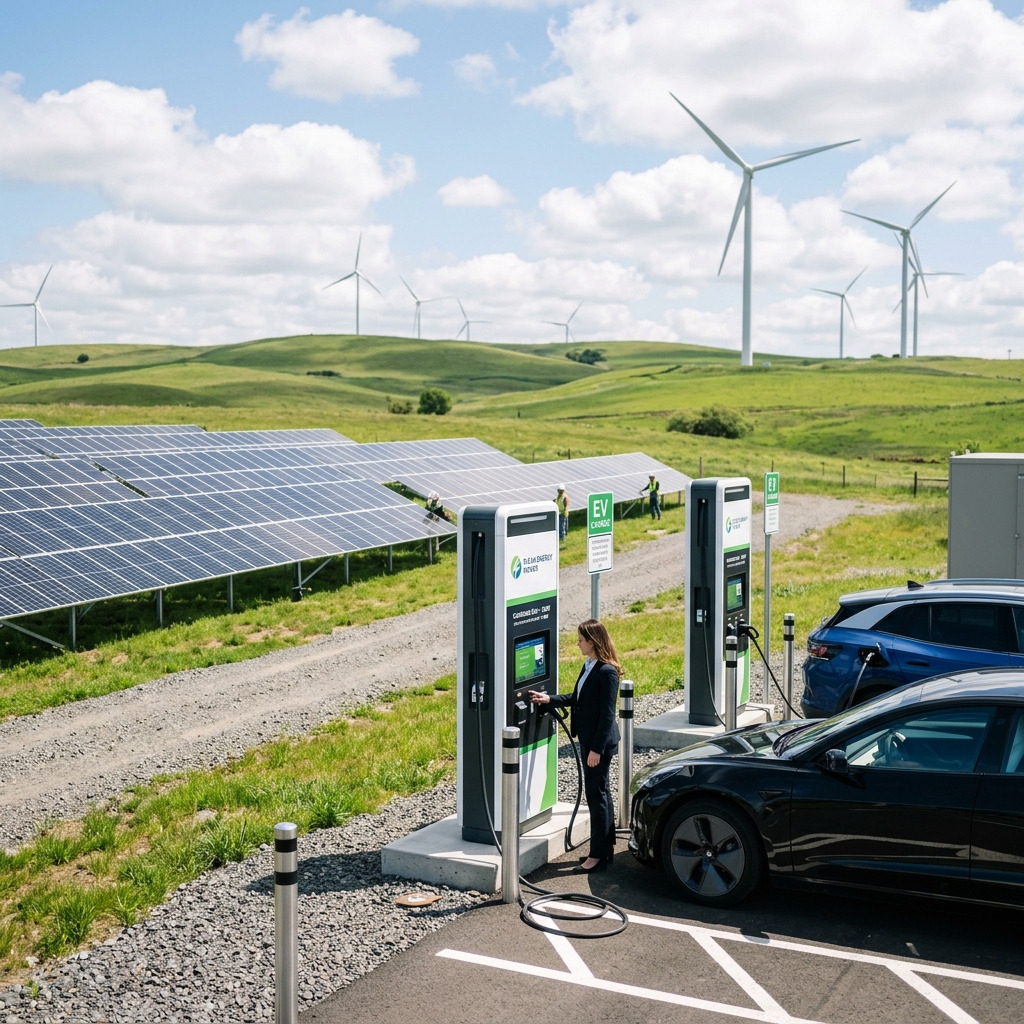
The renewable energy sector in 2026 is experiencing unprecedented growth, driven by the expansion of utility-scale solar arrays, offshore wind farms, battery energy storage systems (BESS), and electric vehicle (EV) charging grids. This rapid scaling has created a high demand for engineers, analysts, and project managers. However, because the green energy sector operates at the intersection of advanced power electronics, strict grid interconnection standards, and environmental permitting, a generic engineering resume will not cut it.
To secure a role in clean energy, your resume must demonstrate technical specificity, project scale, and business impact. Hiring managers look for candidates with hands-on experience in specialized simulation software, grid codes, and EPC (Engineering, Procurement, Construction) management.
If you are updating your application documents, you can utilize our CV Builder to create a structured, professional layout tailored for green tech sectors. You can also upload your draft to our ATS Optimizer to scan for critical keywords and ensure your resume is fully readable by recruiting systems.
Sector-Specific Keyword Strategies
Applicant Tracking Systems (ATS) and clean energy recruiters filter resumes for specialized technical terms based on sub-sectors. Categorizing your experience under these key areas will improve your resume's search visibility:
- Solar PV (Photovoltaic): Focus on system design, inverter matching, bifacial modules, string monitoring, and performance modeling tools like PVsyst, HelioScope, or Aurora Solar.
- Wind Energy: Focus on wind resource assessment, turbine pitch control, rotor aerodynamics, SCADA monitoring, and software tools like WindPRO or Openwind.
- Grid Integration & EV: Highlight power electronics, grid-forming inverters, distributed energy resources (DERs), battery storage chemistry (LFP, NMC), EV charging standards (CCS, MCS), and power systems software like PSS/E or ETAP.
- Commercial & Utility Scale: Showcase experience with PPAs (Power Purchase Agreements), grid interconnection processes (such as FERC Order 2023 or local DNO applications), and EPC project delivery.
Technical Skills Matrix for Clean Energy Roles
Structure your skills block at the top of your resume to showcase software proficiency, technical standards, and certifications.
| Solar & Wind Design | Grid & Power Analysis | Project & Compliance | Certifications |
|---|---|---|---|
| PVsyst / HelioScope | PSS/E / ETAP | Grid Interconnection (G99/FERC) | NABCEP PV Installation Professional |
| Aurora Solar / CAD | HOMER Pro (Microgrids) | Power Purchase Agreements (PPA) | Professional Engineer (PE / CEng) |
| WindPRO / Openwind | MATLAB / Simulink | EPC Contract Management | Certified Energy Manager (CEM) |
| SCADA Systems | DigSILENT PowerFactory | Environmental Permitting (EIA) | PMP / PRINCE2 Practitioner |
If you are preparing to present these technical clean energy certifications during your interviews, practice answering core industry questions with our AI Interview Coach.
Quantifying Your Clean Energy Impact
Translate your work history into quantitative metrics that showcase clean energy capacity, project scale, and capital efficiency.
- Instead of: "Designed solar panels for residential and commercial customers."
- Use: "Designed and simulated 25 commercial solar PV rooftop systems using HelioScope, totaling 4.2MW of capacity and generating an average annual output of 5.1GWh."
- Instead of: "Worked on grid interconnection studies for battery storage projects."
- Use: "Led grid interconnection studies using PSS/E for three utility-scale BESS projects (totaling 150MW/300MWh), reducing interconnection approval times by 20% by ensuring compliance with local grid codes."
- Instead of: "Responsible for wind turbine maintenance and performance tracking."
- Use: "Analyzed SCADA performance data for an 80MW offshore wind farm, identifying yaw misalignment errors on 12 turbines and implementing corrective calibrations that boosted annual energy production (AEP) by 2.4%."
STAR Method Project Examples for Clean Energy
Use the STAR framework to describe major project contributions, demonstrating your problem-solving capabilities.
Example 1: Overcoming Grid Interconnection Bottlenecks (Grid Engineer)
Situation: A 50MW solar PV + 20MW BESS hybrid project was stalled at the grid interconnection stage due to voltage stability concerns raised by the local grid operator.
Task: I was tasked with modeling the system's dynamic response and proposing a mitigation strategy to secure grid connection approval without adding high equipment costs.
Action: I used DigSILENT PowerFactory to run dynamic simulations of the hybrid plant. I identified that configuring the battery inverters to operate in grid-forming mode, rather than standard grid-following mode, would stabilize local voltage fluctuations. I prepared a detailed compliance report showcasing how this configuration met local grid codes, and presented the findings directly to the transmission system operator (TSO) engineering team.
Result: The TSO approved the grid interconnection study. By utilizing the existing BESS inverters in grid-forming mode, we avoided the need to install a £450,000 STATCOM unit, saving project capital expenditure and keeping the project schedule on track.
Example 2: Rolling Out a High-Power EV Charging Network (Project Manager)
Situation: An automotive fleet client needed to deploy 12 ultra-fast EV charging hubs (350kW chargers) across a major logistics corridor, but faced local power supply constraints at 4 of the target locations.
Task: I was assigned to manage the project from feasibility to commissioning, resolving localized grid constraints to ensure the charging hubs could deliver full power.
Action: I performed a feasibility analysis using HOMER Pro and designed a microgrid solution for the 4 constrained sites, integrating localized solar PV canopies and a 250kW battery storage system to buffer peak charging loads. I negotiated grid connection capacities with the Distribution Network Operator (DNO) and managed the EPC contractors during construction.
Result: All 12 charging hubs were commissioned within 9 months, on budget and on schedule. The hybrid microgrid solution allowed the 4 constrained sites to operate at full 350kW capacity without triggering expensive utility substation upgrades, saving the client over £180k in capital costs.
How to Transition from Traditional Engineering to Renewables
If you are transitioning from oil and gas, traditional automotive, or conventional power generation sectors, reframe your skills to highlight transferable competencies:
- From Oil & Gas (Mechanical/Piping): Highlight fluids management, high-pressure piping design, and project safety management. Reframe these as relevant for offshore wind foundations, geothermal piping systems, or green hydrogen electrolysis setups.
- From Traditional Automotive (Mechanical/Electrical): Highlight thermal management, high-voltage battery design, and power electronics. These skills are highly transferable to EV powertrain development and grid-scale BESS engineering.
- From Traditional Utility Power (Electrical): Highlight substation design, high-voltage transmission, protection coordination, and load flow analysis. Reframe these as crucial for integrating utility-scale solar and wind farms into the transmission grid.
Clean Energy Resume Checklist
Review your CV against this quality check before applying:
- Technical Sub-Sector Focus: Solar, wind, BESS, or EV keywords are clearly visible in the top third of page one.
- Quantified Project Capacity: All project references list capacity metrics in MW, MWh, or kW.
- Software Tools Highlighted: Tools like PVsyst, HelioScope, WindPRO, or ETAP are listed.
- No Double Quotes inside Blockquotes: Check that any quotes or blockquote examples are free of manual double quotes.
- Three Short Tags: The post's frontmatter contains exactly three short, relevant tags.
- Relative Internal Links: All links to the builder, optimizer, and interview coach are relative.
Ready to build your perfect CV?
AlignCV helps you create ATS-friendly CVs and tailored cover letters with AI.
Create Your CV NowWritten by
Mehmet Kerem Mutlu
Founder of AlignCV · Mechanical Engineering Student
Mehmet Kerem is a mechanical engineering student and the founder of AlignCV — an AI-powered career platform built to help every job seeker land their next role with confidence. Combining his engineering mindset with a passion for product development, he designs tools that make CV writing, cover letter generation, and interview preparation faster and smarter. He writes about career strategy, AI in hiring, and the future of work.