
Top 10 Product Manager Interview Questions and How to Answer Them (2026)
The European tech landscape in 2026 is more vibrant—and more complex—than ever. Whether you are aiming for a scale-up in Berlin, a fintech giant in London, or a sustainability-focused startup in Amsterdam, the bar for Product Managers (PMs) has shifted.
It is no longer enough to just "build great products." Modern PMs in Europe are expected to navigate fragmented regulations, champion data privacy as a core value, and manage products across diverse cultural markets.
In this guide, we break down the top 10 PM interview questions you will face in 2026, with a specific focus on the European market nuances. We have combined insights from industry leaders like Product School and Mind the Product with our own data on the 2026 hiring landscape.
The shift in European PM interviews
Before we dive into the questions, it is worth noting that the "standard" PM interview has evolved. While US-style "Product Sense" cases are still common at companies like Google or Meta, many European hubs now prioritize:
- Privacy by Design: GDPR isn't a legal hurdle; it's a product feature.
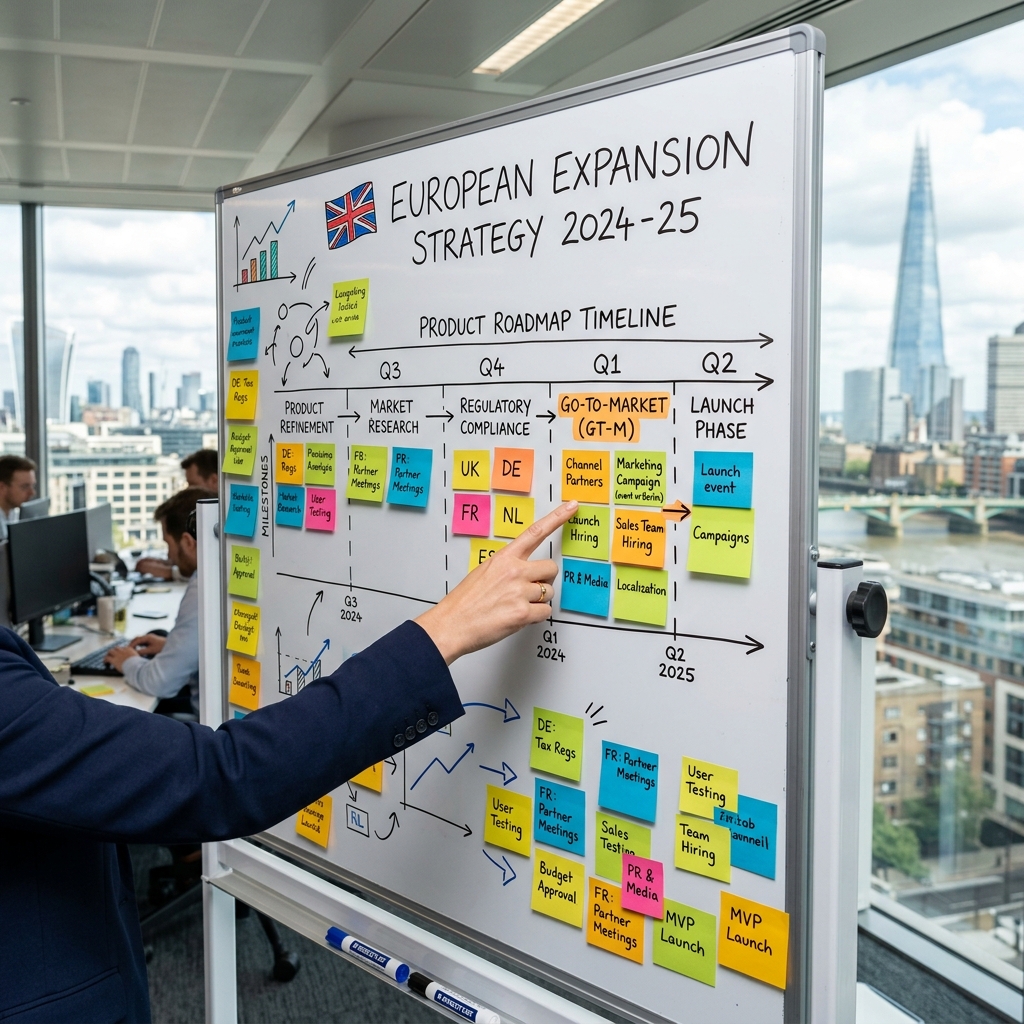
- Sustainability: The "Triple Bottom Line" (People, Planet, Profit) is a real boardroom metric.
- Cross-Border Complexity: How you handle localization, SEPA/iDEAL payments, and multi-market roadmaps.
To ensure your CV even gets you into the room, it must be optimized for these specific European expectations. Using ATS-optimized templates designed for the modern tech market is the first step toward increasing your interview invite rate.
1. Tell me about yourself
This is your opening pitch. In European tech hubs, keep it professional but highlight your "Product Why."
What they want: A concise narrative of your career history, your key product wins, and why you are the perfect fit for this role in this city.
How to answer: Use the Past-Present-Future framework.
I have spent the last five years in the Amsterdam fintech scene, most recently as a Senior PM at a neobank where I led the 'International Markets' squad. I successfully launched our product in three new EU countries, navigating local payment regulations and achieving a 20% MoM user growth. I love solving the complexity of cross-border scaling, which is why I’m so excited about [Company’s] expansion plans into the DACH region.
2. Tell me about a time you had to prioritize features with limited resources
Prioritization is the heart of PM work. In Europe, this often involves balancing global features with local requirements.
What they want: Evidence of a structured framework (MoSCoW, RICE, or Kano) and the ability to say "no" to stakeholders effectively.
How to answer: Describe the trade-off. Mention how you balanced high-impact global features against critical local regulations (like a specific German tax requirement) to ensure the product's overall success.
Tip: If you're worried about how your prioritization stories sound, you can practice them in a realistic environment with our AI Mock Interview tool to get instant feedback on your logic.
3. How do you incorporate GDPR and privacy into your product roadmap?
In Europe, this is a non-negotiable. If you treat privacy as an afterthought, you won't get the job.
What they want: An understanding of "Privacy by Design." You should talk about data minimization—only collecting what is necessary—and how you collaborate with Legal/DPO teams early in the discovery phase.
How to answer:
I treat privacy as a core user experience feature. For example, when we redesigned our onboarding flow, I led a 'Privacy Audit' where we reduced our required data fields by 30%. This didn't just ensure GDPR compliance; it actually improved our conversion rate by 12% because users felt more comfortable sharing less information.
4. How would you improve [Our Product]?
This tests your "Product Sense" and your ability to think critically about the company you want to join.
What they want: Empathy for the user, a clear identification of a pain point, and a creative (yet feasible) solution. Be sure to consider the European context—could they improve their localized experience or sustainability reporting?
How to answer: Don't just list features. Start with the user persona, identify their biggest obstacle, and propose a data-backed solution that aligns with the company's strategic goals.
5. Tell me about a time you handled conflict with a senior stakeholder
European tech cultures vary—from the consensus-driven nature of the Netherlands to the more structured hierarchy sometimes found in Germany.
What they want: Diplomatic influence. Can you change minds using data without damaging relationships?
How to answer: Use the STAR method. Focus on the Data you used to resolve the conflict. Maybe a VP wanted a 'flashy' feature, but your user research showed it wasn't a priority. Explain how you brought the stakeholder along on the journey by sharing the research early.

6. How do you define and measure the success of a new feature?
You need to be a "Data-Informed" PM, not just a "Data-Driven" one.
What they want: A clear link between a feature, a user behavior, and a business KPI. Mention North Star metrics and leading vs. lagging indicators.
How to answer: Describe a specific feature. Explain the primary metric (e.g., 'Retention at Day 30') and the guardrail metric (e.g., 'Doesn't increase support ticket volume').
7. How do you manage a product roadmap across different European markets?
The "Localization vs. Standardization" dilemma.
What they want: Strategic thinking. How do you decide when to build a "one size fits all" feature and when to specialize for the UK, France, or Poland?
How to answer: Discuss your framework for market tiering. You might prioritize features for 'Tier 1' markets (higher revenue/users) while ensuring the core platform remains stable and scalable for smaller markets.
8. Tell me about a product failure and what you learned
Humility and learning agility are highly valued in the 'flat' hierarchies of many European tech firms.
What they want: Ownership. Don't blame the engineers or the market. Explain what you missed in discovery and how you changed your process for the next project.
How to answer:
We launched a carbon-offsetting feature without enough user testing. We assumed users would pay a premium, but the UX was too friction-heavy. I learned that for 'altruistic' features, the UX needs to be even smoother than standard ones. We pivoted the design, and the second iteration saw a 3x higher adoption rate.
9. How do you balance user needs with business goals and technical debt?
The PM "Impossible Triangle."
What they want: Pragmatism. You need to show you understand that a perfect roadmap isn't real. Sometimes you have to ship 'fast' (and incur debt) to hit a market window, but you must have a plan to pay it back.
Before you walk into this discussion, ensure your CV highlights these balancing acts. You can use our ATS Optimizer to see if your resume's 'Impact' sections are hitting the right keywords for European hiring managers.
10. How would you explain a complex technical concept to a non-technical stakeholder?
Communication is your most important tool.
What they want: Clarity and the ability to adapt your language to your audience. This is vital in cross-functional European teams where English might be a second language for some.
How to answer: Use an analogy. Explain an 'API' like a waiter in a restaurant, or 'Technical Debt' like a high-interest credit card. Show you can bridge the gap between Engineering and the rest of the business.
Final Preparation Checklist
You’ve got the questions. Now, here is how you close the deal:
- Research the Company’s EU Strategy: Do they have a presence in multiple countries? What are their local competitors?
- Review your 'STAR' Stories: Have 5 versatile stories ready that cover conflict, failure, data-driven wins, and stakeholder management.
- Optimize your CV for the Market: European recruiters often have specific layout preferences. Ensure yours is ATS-compatible and clean.
- Practice Out Loud: Talking through product cases is a specific skill. Start a mock interview session today to refine your delivery and eliminate "uhms" and "ahs."
An interview isn't a test of how much you know—it's a test of how well you can demonstrate your value in a high-pressure environment. For more deep-dives into product strategy, we highly recommend resources like Product Alliance and IGotAnOffer for their high-quality mock interview examples.
Frequently Asked Questions
Is the STAR method really necessary for PM interviews?
Yes. European hiring managers, especially at larger companies like Booking.com, Zalando, or Revolut, often use structured rubrics. A STAR-formatted answer makes it much easier for them to give you a high score for "Execution" or "Leadership."
How much should I know about GDPR as a PM?
You don't need to be a lawyer, but you should understand the basics of consent, data portability, and the "Privacy by Design" approach. If you can speak intelligently about how these impact your roadmap, you'll be ahead of 90% of candidates.
What is the most important skill for a PM in Europe in 2026?
Cross-functional adaptability. Being able to work across cultures, languages, and technical layers while maintaining a clear, data-informed product vision is the "superpower" of the modern European Product Manager.
Ready to ace your next Product Manager interview? Stop guessing and start practicing. Use AlignCV’s AI-powered mock interview tool to simulate a real London or Berlin tech interview, get scored on your answers, and receive actionable tips to improve before the big day.
Practice with our AI Mock Interviewer
Simulate real interviews, get instant feedback, and build confidence before the big day.
Start PracticingWritten by
Mehmet Kerem Mutlu
Founder of AlignCV · Mechanical Engineering Student
Mehmet Kerem is a mechanical engineering student and the founder of AlignCV — an AI-powered career platform built to help every job seeker land their next role with confidence. Combining his engineering mindset with a passion for product development, he designs tools that make CV writing, cover letter generation, and interview preparation faster and smarter. He writes about career strategy, AI in hiring, and the future of work.