

The transition from the academic studio to a commercial architecture practice has always been a steep climb. But in 2026, the landscape of the "Part 1" or "Graduate Architect" interview has shifted dramatically.
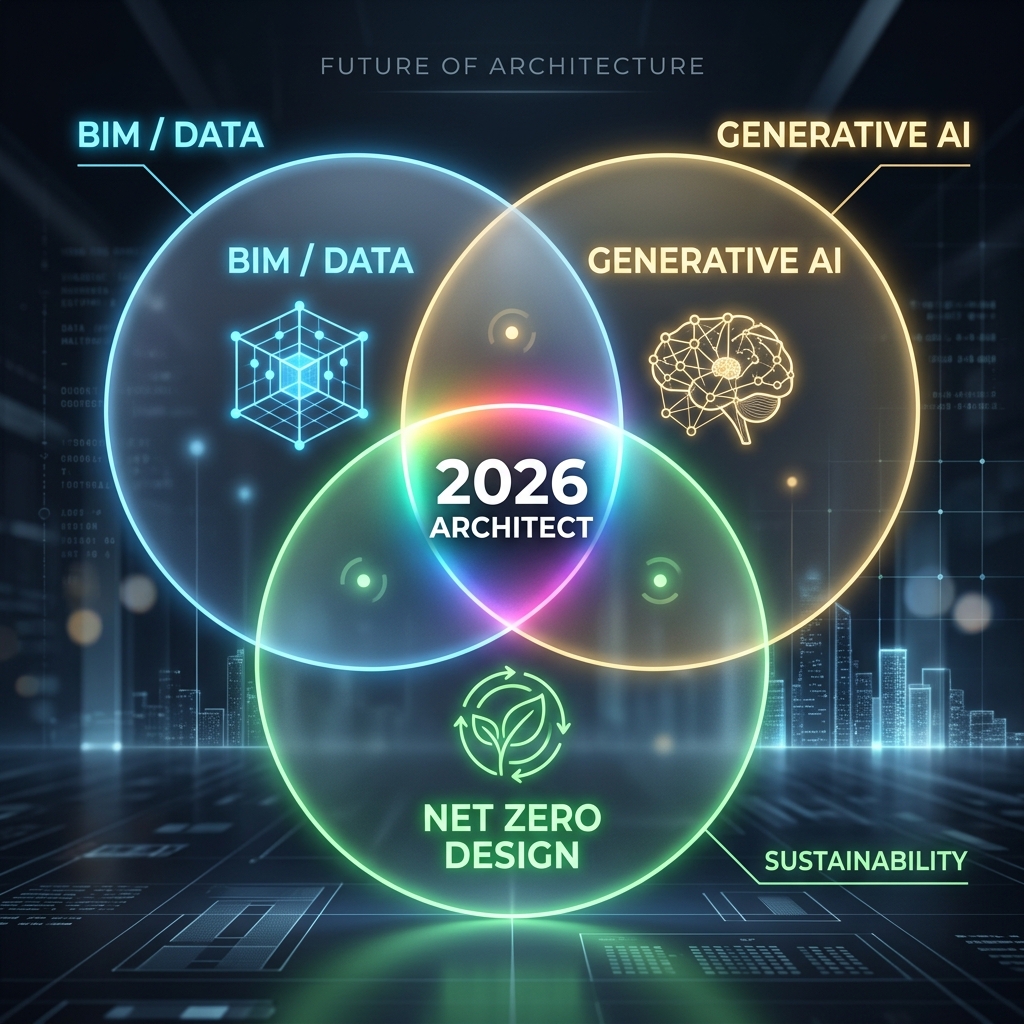
Firms are no longer just looking for someone who can draft in AutoCAD or render pretty pictures in Lumion. The modern architecture practice is deeply embedded in BIM (Building Information Modeling), driven by Generative AI workflows, and strictly bound by Net Zero carbon mandates.
If you are walking into an interview with a top-tier firm, your portfolio is only the baseline. Your true test will be how you articulate your design process, your understanding of building physics, and your ability to collaborate in a multi-disciplinary digital environment.
In this comprehensive 3,000-word guide, we will break down the exact technical, behavioral, and portfolio review questions you will face in 2026, and show you how to answer them using the STAR-Impact Method.

Part 1: The 2026 Paradigm Shift — What Firms Actually Want
To succeed in a 2026 interview, you must understand the current pressures facing Senior Partners and Design Directors.
1. The BIM Mandate
Firms do not have the time to train you on the basics of Revit or ArchiCAD. They expect you to understand the difference between drafting a line and modeling a data-rich component. You need to show that you understand "Level 2 BIM" collaboration and how architectural models interface with MEP (Mechanical, Electrical, and Plumbing) and Structural models.
2. AI as a Design Partner
The use of Generative AI (like Midjourney for conceptualization or AI plugins for Revit space planning) is now standard practice. Interviewers want to see that you use AI as a tool for rapid iteration, not as a crutch that replaces your understanding of spatial proportion.
3. Sustainability is Non-Negotiable
You must be fluent in the language of sustainable design. Concepts like Embodied Carbon, Passive House principles, and LEED Certification criteria should be woven into your answers naturally.
Part 2: The Portfolio Review — Surviving the Firing Squad
The Portfolio Review is the centerpiece of any architecture interview. In 2026, this is rarely a physical book; it is a digital presentation, often interactive.
How to Present Your Work
Do not just turn the pages and say, "This is a museum I designed." The panel can see it is a museum. Instead, focus on the Problem-Solving Narrative.
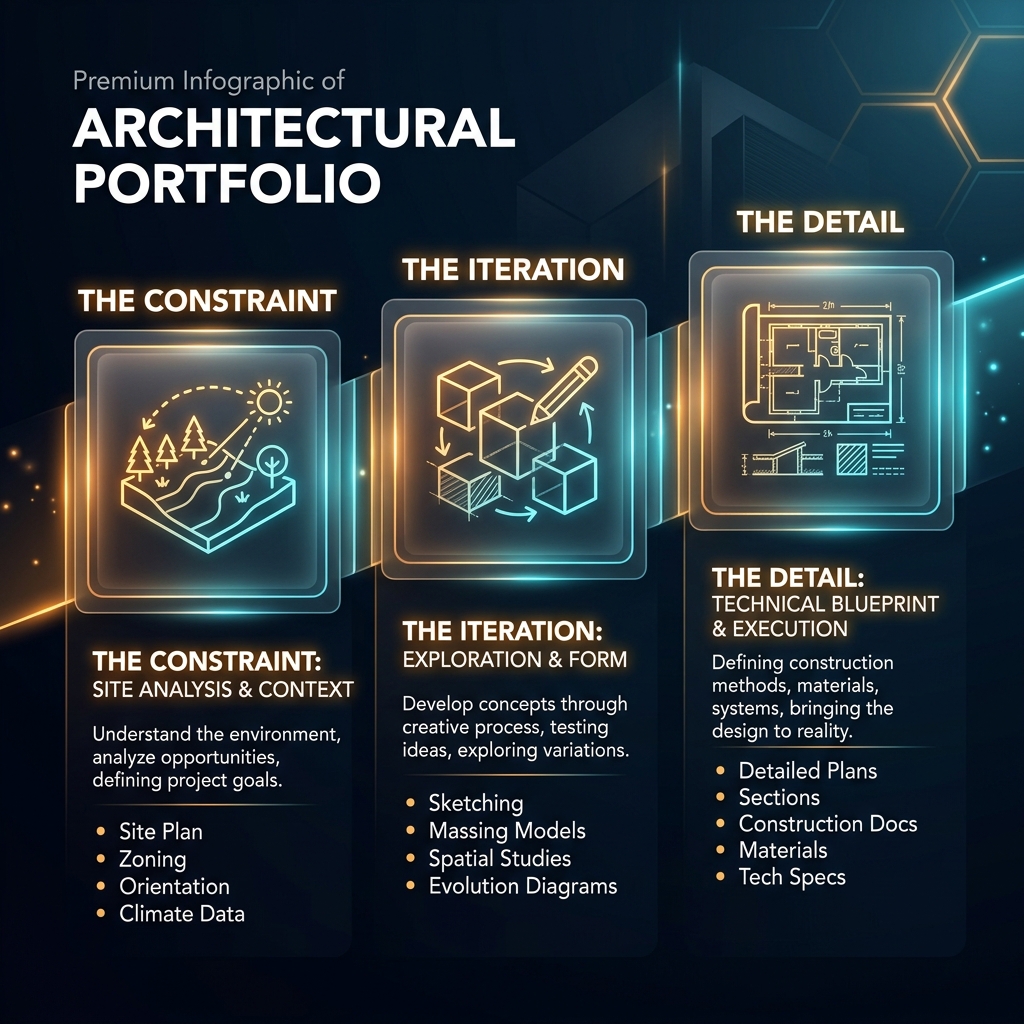
- The Constraint: What was the most difficult site constraint or programmatic requirement?
- The Iteration: Show sketches or massing models that you rejected. Firms want to see how you think, not just the final polished render.
- The Detail: Include at least one 1:10 or 1:20 technical detail section. This proves you understand how materials actually join together in the real world.
Anticipated Portfolio Questions
Q: "Walk me through your process for this project."
The Winning Strategy: Start macro, go micro.
For this urban housing project, I started with a macro-analysis of the site's solar orientation and prevailing winds. I used Rhino and Grasshopper to run a daylighting analysis, which dictated the angled facade design. Once the massing was optimized for passive solar gain, I moved into Revit to detail the structural grid and ensure the floorplates met the client's net-usable-area requirements. The final renders were just a byproduct of a data-driven design process.
Q: "If you had two more weeks to work on this, what would you change?"
The Winning Strategy: Show self-awareness and commercial realism. Never say "Nothing, it is perfect." Answer: "I would spend more time optimizing the structural grid for cost efficiency. The cantilevered section is visually striking, but by running a deeper clash detection with the structural model, I could likely simplify the steel connections to reduce the embodied carbon and construction cost."
Part 3: Technical Questions — Building Physics and BIM
You will be tested on your practical knowledge of how buildings go together.
Q1: "Explain the concept of Embodied Carbon vs. Operational Carbon."
Answer: "Operational carbon refers to the greenhouse gases emitted during the everyday use of a building, like heating, cooling, and lighting. Embodied carbon refers to the emissions associated with the manufacturing, transportation, and assembly of the building materials themselves. In 2026, as operational systems become highly efficient, embodied carbon represents the biggest opportunity for architects to reduce a building's overall environmental impact."
Q2: "How do you manage clash detection in a multi-disciplinary BIM environment?"
Answer: "I view the central Revit model as the 'single source of truth.' I regularly use tools like Navisworks to run interference checks between our architectural model and the MEP consultant's ductwork. Identifying a clash digitally saves thousands of dollars compared to finding it on-site during construction."
Q3: "What is your approach to detailing a flat roof?"
Answer: "The absolute priority is water management and thermal continuity. I ensure there is an adequate fall (usually 1:40 design fall to achieve 1:80 on-site) directing water to the outlets. I also detail the insulation to prevent cold bridges, especially at the parapet junction, ensuring the vapor control layer is continuous."
Part 4: Behavioral Questions — The STAR-Impact Method
Architecture is a highly collaborative, high-stress profession. Interviewers will use behavioral questions to gauge your Emotional Intelligence (EQ). We use the STAR-Impact Method (Situation, Task, Action, Result, Impact).
Q: "Tell me about a time you disagreed with a tutor or senior designer about a design direction."
The Winning Strategy: Show that you can defend your ideas with data, but ultimately respect the hierarchy and project goals.
During my final year studio, my tutor pushed for an expansive glass facade on the south elevation of my library project (Situation). I was concerned about severe solar heat gain and the resulting cooling loads (Task). I ran a rapid energy simulation using a parametric plugin, which proved the glass facade would fail the local energy code (Action). I presented this data alongside an alternative design featuring deep louvers that maintained the aesthetic while reducing heat gain by 40% (Result). My tutor agreed to the change, and the project ultimately received a commendation for sustainable innovation, teaching me that good design must always be backed by empirical data (Impact).
Part 5: The Commercial Mindset
Many graduates fail because they treat commercial architecture like an art project. Following guidelines from the American Institute of Architects (AIA), modern practices are businesses with strict budgets, tight deadlines, and demanding clients.
Q: "How do you balance design ambition with a strict client budget?"
Answer: "I believe constraints breed creativity. If a client has a tight budget, I don't see it as a compromise; I see it as a design parameter. I focus on optimizing the 'chassis' of the building—efficient structural grids and standardized material dimensions—so that we can save the budget for high-impact 'moments,' like a beautifully detailed entrance canopy or a high-quality tactile material in the main lobby."
Part 6: Preparing for the 2026 Interview with AlignCV
Landing a role at a prestigious firm requires more than just a good render. You need to sound like a professional from minute one.
1. Practice the "Crit" with our AI Interview Coach
The architecture interview is essentially a professional "Critique" (Crit). Use our AI Interview Coach to simulate the pressure of a Partner questioning your design decisions. Practice explaining your parametric scripts or your sustainable material choices out loud.
2. Format a Clean, Minimalist CV
Architects are obsessed with typography and layout. If your CV is messy, they won't even look at your portfolio.
- Use our CV Builder to create a beautifully structured, grid-aligned resume.
- Ensure your technical software skills (Revit, Rhino, Enscape, Python) are easily scannable.
- Avoid Buzzword Stuffing and let your project metrics speak for themselves.
Final Thoughts: Designing Your Career
In 2026, the world does not need more architects who only know how to make things look beautiful. The world needs architects who can design buildings that perform beautifully, sustain the environment, and uplift the communities they serve.
When you sit down for your interview, do not present yourself as a student looking for a job. Present yourself as a Design Professional ready to solve complex problems in a rapidly changing world.
Your blueprint to success starts with a flawless interview.
Practice with our AI Mock Interviewer
Simulate real interviews, get instant feedback, and build confidence before the big day.
Start PracticingWritten by
Mehmet Kerem Mutlu
Founder of AlignCV · Mechanical Engineering Student
Mehmet Kerem is a mechanical engineering student and the founder of AlignCV — an AI-powered career platform built to help every job seeker land their next role with confidence. Combining his engineering mindset with a passion for product development, he designs tools that make CV writing, cover letter generation, and interview preparation faster and smarter. He writes about career strategy, AI in hiring, and the future of work.