
The landscape of entry-level sales has undergone a seismic shift as we move into 2026. The "Wolf of Wall Street" era of aggressive, high-pressure cold calling is being replaced by a sophisticated, data-driven, and highly empathetic approach known as consultative selling.
If you are applying for an SDR (Sales Development Representative) or BDR (Business Development Representative) role today, hiring managers aren't just looking for someone who can "smile and dial." They are looking for strategic thinkers who can leverage AI tools, navigate complex B2B buying committees, and build genuine relationships in a digital-first world.
In this 3,000-word masterclass, we will deconstruct the most critical entry-level sales representative interview questions for 2026. We will provide you with winning answers using the STAR-Impact method—which you can practice in real-time with our AI Interview Coach—and show you how to demonstrate the "Sales DNA" that recruiters are desperate to find. If you are a recent graduate just starting out, you might also find our comprehensive guide on CV tips for fresh graduates with no experience a perfect starting point.

The New Sales DNA: What 2026 Recruiters Want
Before we dive into the questions, you must understand the three pillars of a successful 2026 sales candidate:
- Tech-Stack Fluency: You don't just use a CRM; you know how to leverage AI-powered lead scoring and automated sequencing tools like Salesforce or HubSpot.
- Resilience (The "Grit" factor): Sales is still a game of rejection. You must show that you treat "No" as a request for more information, not a personal defeat.
- Consultative Mindset: You are a problem solver first, a salesperson second. You research the prospect's "pain points" before ever picking up the phone. To ensure your resume reflects this high-level strategic thinking, use the ATS Optimizer to tailor your experience bullet points to match these modern sales expectations.
Top 15 Sales Interview Questions and Winning Answers
1. "Why do you want to work in sales?"
This is the most common filter question. Avoid saying "I like talking to people." Instead, focus on the thrill of the challenge and the direct link between effort and reward.
Winning Answer:
I’ve always been driven by measurable results. In my previous role as a campus ambassador, I realized that I thrive in environments where my output is directly tied to my performance. I enjoy the challenge of identifying a problem, researching a solution, and persuading someone that our product is the missing piece of their puzzle. To me, sales is the ultimate meritocracy, and that’s exactly where I want to build my career.
2. "Tell me about a time you faced significant rejection. How did you handle it?"
Hiring managers ask this to gauge your resilience. Use the STAR-Impact method.
Winning Answer:
Situation: During my internship, I was tasked with securing 20 sign-ups for a new student discount app within a week.
Task: I had to pitch to students who were often in a rush or uninterested in hearing about another app.
Action: On the second day, I faced 15 consecutive rejections. Instead of getting discouraged, I analyzed my pitch. I realized I was focusing too much on the features and not the savings. I shifted my focus to "saving the price of a coffee every day."
Result: By changing my approach and maintaining my volume, I secured 25 sign-ups by the end of the week.
Impact: I learned that rejection is just data. It tells you when your message isn't landing and forces you to iterate until it does. Dealing with rejection is a core part of the process; for more general advice on navigating your first professional meetings, check out our graduate interview tips for beginners.
3. "How do you handle a prospect who says, 'We don't have the budget for this'?"
In 2026, budget objections are rarely about the money; they are about the perceived value.
Winning Answer:
I treat a budget objection as an opportunity to dig deeper into their priorities. I’d respond by saying, 'I completely understand that budget is a constraint. If we put the cost aside for a moment, is this a solution that you feel would solve [Problem X] that we discussed?' If they say yes, then it’s my job to show them the ROI (Return on Investment). If the cost of the problem is higher than the cost of our solution, the budget usually becomes available.
The 2026 "Sell Me This Pen" Challenge
In older interviews, this was about being a "smooth talker." In 2026, it's about Discovery.
The Winning Strategy: Do not start by describing the pen. Start by asking questions.
- "How long have you been looking for a pen?"
- "What do you typically use your pen for—signing contracts or taking notes?"
- "What was the last pen you owned that you actually loved, and why?"
Winning Answer:
Before I tell you about this pen, I need to understand if it’s even the right tool for you. When was the last time you used a pen? [Wait for answer]. And what frustrated you about that experience? Was it the ink flow, the grip, or the fact that it felt cheap during an important meeting? [Wait for answer]. Based on what you’ve told me, you need something that is reliable for high-stakes signings but feels professional. This pen features...
Navigating the Tech Stack: Social Selling and AI
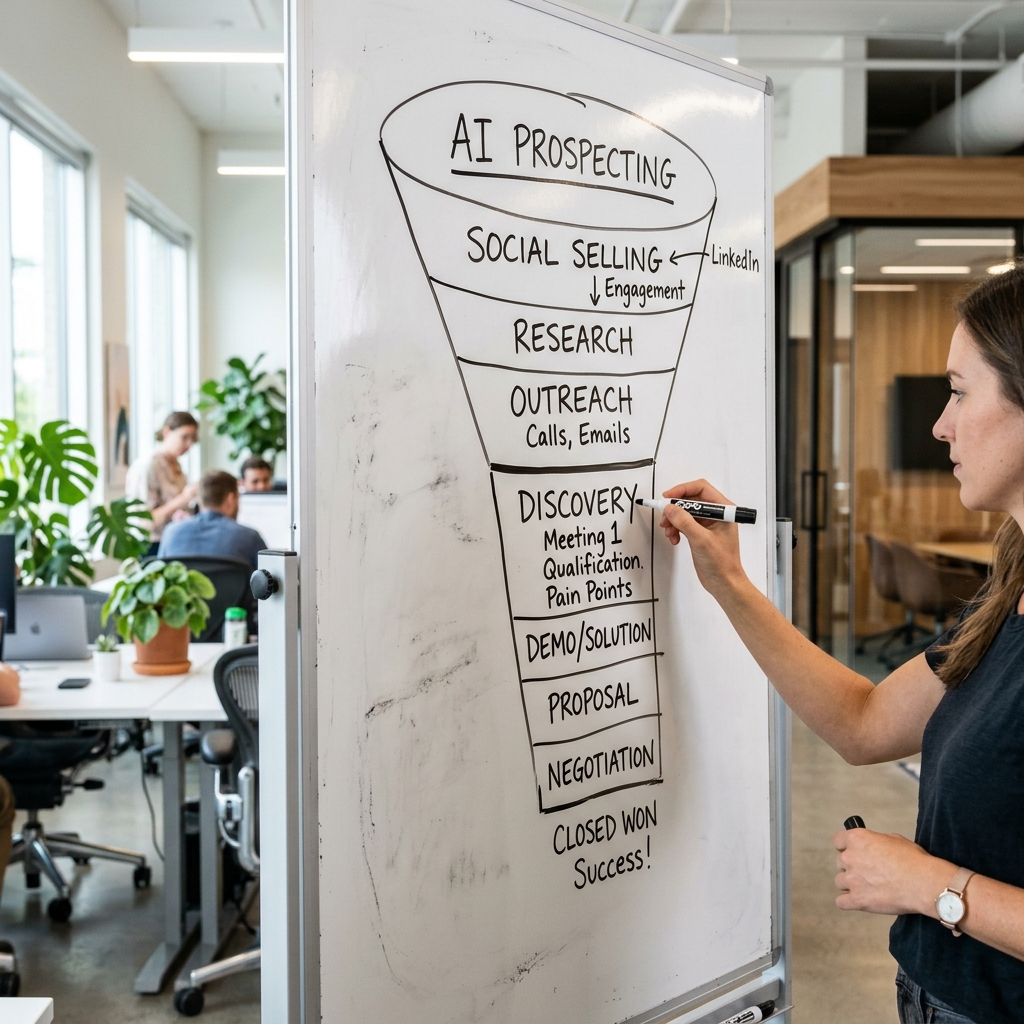
As an entry-level SDR or BDR, your ability to use tools is a competitive advantage. You should be familiar with the LinkedIn Sales Navigator ecosystem and how to use AI to personalize your outreach at scale.
[!TIP] When discussing tools, focus on Efficiency. Mention how you use AI to summarize company earnings calls so you can walk into a discovery meeting with deep insights in half the time.
Is Your Resume Closing the Deal?
Before you can even get to the interview, your resume has to survive the "first gate." In the competitive sales world, recruiters spend less than 6 seconds on a resume before deciding to "Close" or "Discard."
If you aren't sure if your resume is optimized for a high-energy SDR role, you should try an Initial Assessment. Our Free ATS Checker allows you to run a quick scan of your document to see if you are missing the critical keywords that sales recruiters are searching for in 2026. If you find your score is low, you can instantly rebuild your document using our CV Builder to ensure you are highlighting the "Sales DNA" that hiring managers are desperate to find. For a deeper dive into the technical side of things, read our guide on how to tailor your CV to any job description.
Behavioral Questions: Culture and Coachability
Hiring managers in 2026 prioritize Coachability above almost everything else. They want to know that if they give you feedback, you will implement it immediately.
4. "Give me an example of feedback you received and how you implemented it."
Winning Answer:
In my last role, my manager told me that my email outreach was a bit too 'robotic' and lacked personalization. I took that feedback and started spending 5 minutes on every prospect's LinkedIn profile before emailing. I looked for a recent post they shared or a common connection. Within two weeks, my open rates increased by 35%. I realized that being coachable is the fastest way to accelerate my learning curve.
5. "How do you stay organized when managing 50+ leads a day?"
Winning Answer:
Organization is the backbone of sales. I use a 'time-blocking' strategy. I dedicate the first 90 minutes of my day to high-intensity prospecting while my energy is highest. I then block out time for follow-ups and administrative CRM work in the afternoon. I rely heavily on my CRM tasks to ensure that no lead ever falls through the cracks. In sales, the fortune is in the follow-up.
The Closing Statement: Treat the Interview Like a Sale
At the end of a sales interview, you should Close the Interviewer. This shows you aren't afraid to ask for the business.
The Winning Close:
Based on our conversation today, do you have any concerns about my ability to hit the ground running as an SDR here? [Wait for response]. If not, I'd love to know what the next steps are in the process. I'm very excited about the opportunity to contribute to the team's growth.
Final Checklist for Sales Success
- Research the Company: Know their "Ideal Customer Profile" (ICP).
- Prepare Your Numbers: Even as a graduate, show your "metrics" (GPA, club memberships, part-time sales targets).
- Clean Up Your LinkedIn: Sales recruiters will check your profile before they call you.
- Practice Your "Hook": Have a 30-second elevator pitch ready for "Tell me about yourself."
In 2026, the best sales jobs go to the most prepared candidates. By aligning your application with these modern standards and using the tools at your disposal, you can ensure you are the one signing the offer letter.
Practice with our AI Mock Interviewer
Simulate real interviews, get instant feedback, and build confidence before the big day.
Start PracticingWritten by
Mehmet Kerem Mutlu
Founder of AlignCV · Mechanical Engineering Student
Mehmet Kerem is a mechanical engineering student and the founder of AlignCV — an AI-powered career platform built to help every job seeker land their next role with confidence. Combining his engineering mindset with a passion for product development, he designs tools that make CV writing, cover letter generation, and interview preparation faster and smarter. He writes about career strategy, AI in hiring, and the future of work.