
The interview process for a Defence Contractor is unlike any other engineering role. In 2026, firms are looking for more than just technical brilliance. They are looking for "Cleared Thinking"—the ability to solve complex problems within strict security, ethical, and regulatory frameworks.
Whether you are a fresh graduate or an entry-level engineer applying to giants like Lockheed Martin or BAE Systems, the interview is designed to test your "Integrity" as much as your "Calculus."
In this 3,000-word masterclass, we will deconstruct the most critical entry-level defence engineering interview questions for 2026. We will provide you with winning answers using the STAR-Impact method—which you can practice in real-time with our AI Interview Coach—and show you how to demonstrate the "Defence DNA" that recruiters are looking for.

The 2026 Defence Interview Mindset: The "Cleared" Engineer
Before we dive into specific questions, you must understand the three dimensions of a defence interview:
- Technical Competence: Can you apply your engineering principles to aerospace, maritime, or land-system challenges?
- Security Awareness: Do you understand the importance of ITAR, EAR, and the "Need to Know" principle?
- Ethical Integrity: How do you handle conflict or pressure when national security interests are at stake?
To ensure your application reflects this level of professional maturity before you even step into the room, use our ATS Optimizer to align your CV with the specific security and technical competencies mentioned in the job description.
Top Behavioral and Security Questions
1. "How would you handle a situation where a close friend or family member asked you about a sensitive project you are working on?"
This is a "Security Awareness" test. They are checking if you can maintain boundaries.
Expert Answer:
Situation: As a Junior Engineer, I was working on a project with a high level of technical sensitivity. During a social event, a family member who was interested in my career asked for specific details about the platform I was assigned to.
Task: I needed to maintain my professional confidentiality without appearing dismissive or violating security protocols.
Action: I politely but firmly stated that due to the nature of the contract, I was unable to discuss specific project details. I redirected the conversation to the general technical challenges I was facing, such as working with new composite materials, without mentioning the application or program name.
Result: The family member understood the boundary, and I maintained the integrity of the project's 'Need to Know' status.
Impact: This demonstrated that I could be trusted with sensitive information in a social setting, which is a core requirement for holding a security clearance. It taught me that 'Discretion' is a 24/7 responsibility in the defence industry.
2. "Tell us about a time you identified a technical error or a potential safety risk. How did you escalate it?"
Safety and quality are paramount in defence engineering. Use the STAR-Impact method.
Expert Answer:
Situation: During a stress-test simulation for a new landing gear component, I noticed a slight variance in the load-bearing data that didn't align with the initial CAD predictions.
Task: I had to determine if this was a simulation error or a genuine design flaw before the project moved to the prototyping phase.
Action: I halted the simulation and performed a manual cross-check of the input parameters. I identified a small error in the material density profile. Instead of fixing it quietly, I documented the findings and presented them to the Lead Engineer, proposing a re-simulation with the corrected data.
Result: The re-simulation confirmed the fix, avoiding a potential £50,000 prototyping error.
Impact: My attention to detail saved significant project costs and ensured the technical integrity of the component. This reinforced for me that 'Technical Honesty' is the most important trait an engineer can have when lives depend on the hardware.
Mastering the Technical Walkthrough
In 2026, technical interviews often involve a "Live Problem Solve" using digital tools. You should be prepared to discuss:
- Systems Engineering: How do you manage the "V-Model" lifecycle?
- Failure Analysis: Can you walk through a FMEA (Failure Mode and Effects Analysis)?
- Cyber-Security in Hardware: How do you protect a physical system from a digital intrusion?
[!TIP] Mention Compliance Standards. In 2026, referencing ISO 9001 or AS9100 (Aerospace Quality Standard) shows you already have a 'Quality First' mindset.
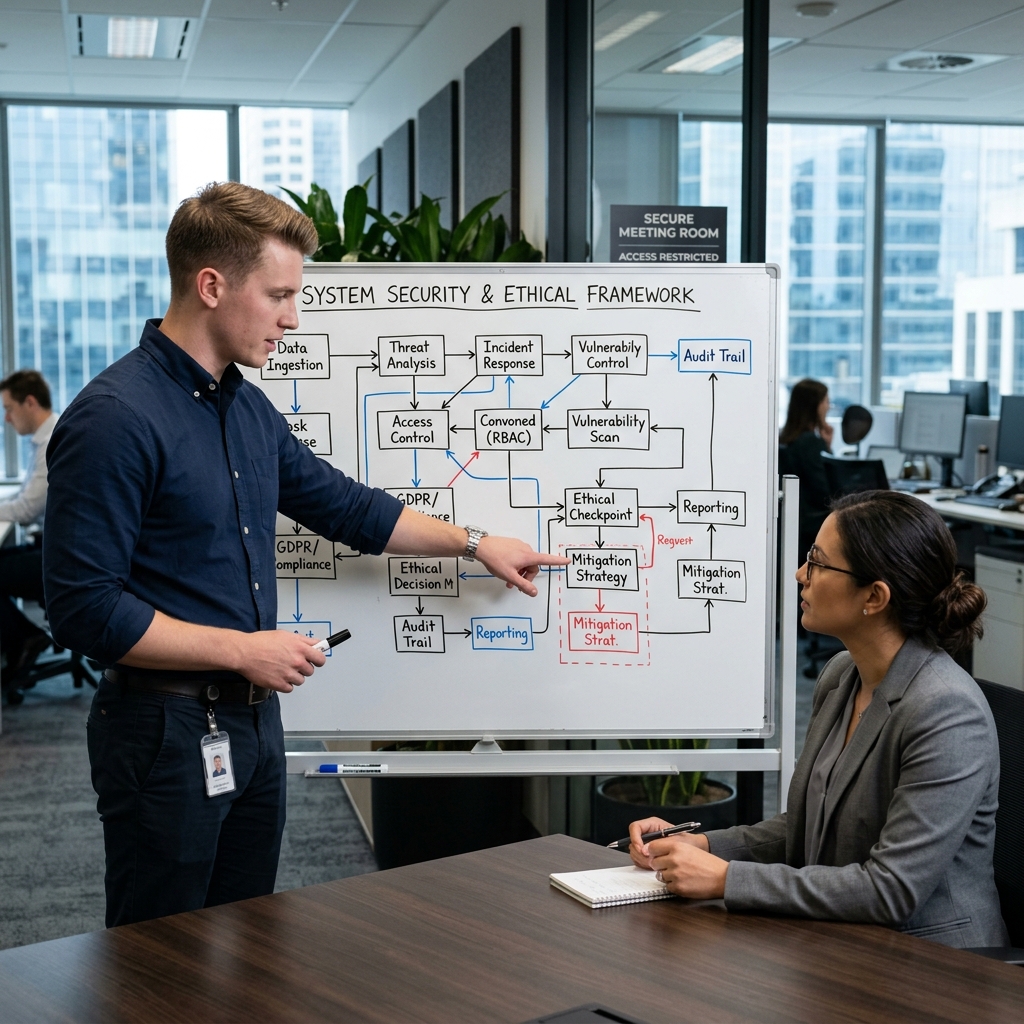
2026 Trends: The "Digital Twin" and Ethics in AI
Defence engineering is increasingly digital. Be prepared for these topics:
- Digital Twin Technology: How do you use virtual models to predict physical performance?
- Ethics in AI Defence: How do you ensure an autonomous system remains within human-defined ethical boundaries?
If you are a recent graduate looking for more general advice on entering the workforce, read our top CV tips for fresh graduates.
Behavioral Questions: The "Defence DNA"
3. "Why do you want to work in the defence industry specifically?"
Avoid saying "it pays well" or "it's cool technology." Focus on Purpose and Impact.
Expert Answer:
I’ve always been fascinated by engineering at the absolute limit of possibility, where there is zero margin for error. Working in defence means contributing to systems that protect national security and global stability. I want to work in an environment where my technical skills serve a larger purpose—ensuring that the men and women in the field have the most reliable and advanced equipment possible. To me, defence is the ultimate expression of engineering responsibility.

Final Checklist for Defence Interview Success
- Review Security Protocols: Know what ITAR and EAR mean.
- Prepare Your Technical Stories: Use the STAR-Impact method for every design challenge you’ve faced.
- Research the Contractor: Know their major current platforms (e.g., F-35, Type 26 Frigate).
- Dress for a Secure Environment: Professional business attire is the standard.
Before you go, make sure your resume is as robust as your interview preparation. Our Free ATS Checker will tell you if your CV is hitting the right notes for a high-stakes engineering role. If you need a complete overhaul, our CV Builder has specialized templates for aerospace and defence professionals.
In 2026, the best engineering roles go to those who combine technical precision with unwavering integrity. By preparing with these standards, you can ensure your career in defence starts on solid ground.
Practice with our AI Mock Interviewer
Simulate real interviews, get instant feedback, and build confidence before the big day.
Start PracticingWritten by
Mehmet Kerem Mutlu
Founder of AlignCV · Mechanical Engineering Student
Mehmet Kerem is a mechanical engineering student and the founder of AlignCV — an AI-powered career platform built to help every job seeker land their next role with confidence. Combining his engineering mindset with a passion for product development, he designs tools that make CV writing, cover letter generation, and interview preparation faster and smarter. He writes about career strategy, AI in hiring, and the future of work.