

Securing a role as a construction project manager or site superintendent in 2026 requires more than reciting standard building processes. Hiring panels at leading contracting firms assess candidates on their decision-making process under pressure. They look for managers who can navigate subcontractor disputes, solve supply chain bottlenecks, enforce rigid safety policies, and protect thin profit margins.
To pass these technical interviews, you must demonstrate first-hand experience with real-world scenarios. General answers like "I have great communication skills" are no longer sufficient. Instead, you must structure your responses to showcase technical project management frameworks, safety compliance standards, and commercial outcomes.
To build a professional, clean resume before you head into your interview, you can utilize our online CV Builder. If you want to run a realistic simulation of your upcoming panel discussion, you can practice answering high-pressure questions with our interactive AI Interview Coach to refine your delivery.
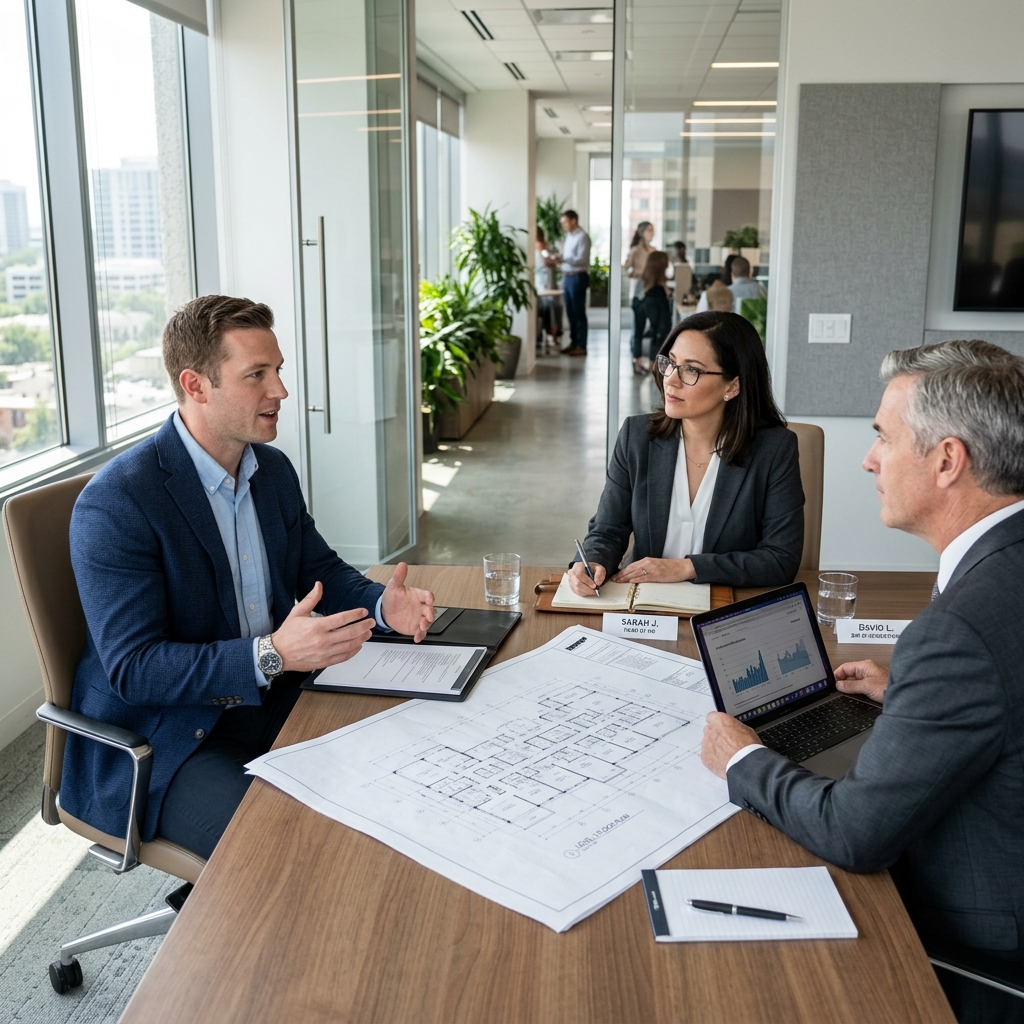
The Interview Prep Strategy: The STAR Method for Construction
When interviewing for management positions, every scenario-based response should follow the STAR structure (Situation, Task, Action, Result).
- Situation: Describe the specific project, budget size, and building phase.
- Task: Outline the immediate challenge or risk to the project's critical path.
- Action: Detail your specific engineering, leadership, or scheduling actions.
- Result: Provide quantified outcomes, focusing on safety statistics, time saved, or costs recovered.
5 Tough Construction Manager Interview Questions and Answers
Question 1: How do you handle a subcontractor who is consistently falling behind schedule?
What the interviewer is testing: Your ability to manage subcontractor relationships, identify root causes of delays, and implement scheduling changes without escalating disputes.
Situation: During a £14M warehouse construction project, the structural framing subcontractor fell two weeks behind their baseline schedule due to labor shortages, threatening to delay the subsequent roof installation.
Task: I needed to accelerate the framing phase to recover the schedule without compromising building quality or increasing contract costs.
Action: Instead of issuing immediate contractual default notices, I scheduled a face-to-face meeting with the subcontractor's foreman to review their resource allocation. I identified that they lacked skilled welders on-site. I coordinated with the client to adjust the payment schedule slightly to help the subcontractor cover welder overtime. Simultaneously, I split the framing work into two zones, allowing the framing team to work concurrently with the ground floor slab team.
Result: The subcontractor added an extra shift, and we recovered the two-week delay within 18 days. The roof cladding started on the exact day planned in our original critical path schedule, and the project was completed on time.
Question 2: Describe a time you had to halt work on a site due to a safety violation. How did you manage it?
What the interviewer is testing: Your commitment to safety compliance (such as OSHA or CDM 2015 standards) and your ability to assert authority without permanently disrupting project relationships.
Situation: During a routine safety walkthrough on a high-density residential development, I observed two scaffolding subcontractors working at a height of 6 meters without personal fall arrest systems (harnesses) attached to static lines.
Task: I had to halt operations immediately to eliminate the fall hazard, address the compliance failure, and resume work safely with minimal downtime.
Action: I issued an immediate stop-work order for that specific zone and instructed the subcontractors to descend safely. I called an emergency meeting with the subcontractor's site supervisor and safety officer. I reviewed our site safety plan and RAMS (Risk Assessment and Method Statement). I required the subcontractor to conduct an on-the-spot safety stand-down and inspect all fall arrest gear. I also documented the safety infraction in our digital site management software.
Result: The subcontractor completed a safety refresher session, and work resumed safely after a 2-hour delay. By taking direct action, I reinforced a strict safety culture, resulting in zero further fall protection violations over the remainder of the 18-month build.
Question 3: How do you manage project budget overruns when unexpected ground conditions occur?
What the interviewer is testing: Your geological and engineering understanding, risk management approach, and financial recovery strategies.
Situation: During the excavation phase of a £9M commercial office building, we encountered undocumented soft clay and a high water table that were not identified in the initial soil reports, which threatened to increase piling costs by 20%.
Task: I needed to develop an engineering solution to stabilize the ground while working with the structural engineer and client to mitigate the budget impact.
Action: I halted excavation in the affected zone and coordinated with a geotechnical specialist to perform rapid testing. I proposed an alternative foundation design, switching from deep concrete piles to a stabilized raft foundation with continuous flight auger (CFA) piling. I presented a detailed cost-benefit analysis and scheduling comparison to the client showing that this change would reduce the soil disposal volume and cut piling times.
Result: The client approved the raft foundation design. The engineering change saved £110k in material and disposal costs, offsetting the excavation overrun by 85% and limiting the total budget deviation to less than 1.5%.
Question 4: How do you use technology to improve communication and track progress on-site?
What the interviewer is testing: Your familiarity with modern construction software (like Procore, BIM 360, Aconex) and your ability to lead digital transitions.
Situation: On a multi-phase school build, paper-based drawing distributions were causing subcontractors to construct from outdated revisions, leading to re-work and scheduling friction.
Task: I was tasked with establishing a single source of truth for all architectural and engineering documents to eliminate build errors.
Action: I implemented Procore as our primary site management platform. I set up dedicated tablet stations in the site office and main work areas, and trained subcontractor foremen on how to access real-time digital drawings. I mandated that all RFIs (Requests for Information) and submittals be processed directly through the app, and used QR codes on columns to link physical zones to current digital BIM models.
Result: Pushing drawing updates digitally cut our blueprint distribution time from days to minutes. Build errors due to outdated drawings dropped to zero, saving the project an estimated £45k in re-work and material waste.
Question 5: How do you handle a dispute between the project architect and the client's representative?
What the interviewer is testing: Your conflict resolution skills, negotiation capabilities, and focus on the project's commercial goals.
Situation: Near the completion of a commercial development, a dispute arose when the client's representative rejected a specific lobby cladding material selected by the architect, claiming it did not meet the aesthetic requirements of the contract.
Task: I had to mediate the dispute to avoid delays to the final inspection and handover.
Action: I scheduled an on-site review meeting with the architect and the client's representative. I researched the material specifications and identified three alternative, locally-sourced cladding materials that met both the architect's design intent and the client's aesthetic criteria. I presented these options along with samples, lead times, and cost adjustments.
Result: Both parties agreed on one of the alternative materials, which was available for immediate delivery. The compromise avoided a potential £20k contract dispute, allowed us to complete the lobby installation on schedule, and secured the final occupancy permit on time.
Quick Reference: Construction Manager Interview Checklist
Before your interview, review this quick preparation list:
- Quantified Project Portfolio: Be ready to state the exact budget size, square footage, and team numbers for your past three projects.
- BIM and Software Fluency: Memorize the specific project management tools (e.g. Procore, Aconex, Primavera P6) you used.
- Safety Metrics: Have at least one example of a safety challenge you resolved, detailing the regulatory standards (OSHA/HSE) involved.
- Commercial Focus: Be prepared to discuss how you managed budget variations and value engineering.
If you want to review the keyword optimization of your resume before presenting it to employers, you can check it using our ATS Optimizer to ensure your key construction skills are properly highlighted.
Practice with our AI Mock Interviewer
Simulate real interviews, get instant feedback, and build confidence before the big day.
Start PracticingWritten by
Mehmet Kerem Mutlu
Founder of AlignCV · Mechanical Engineering Student
Mehmet Kerem is a mechanical engineering student and the founder of AlignCV — an AI-powered career platform built to help every job seeker land their next role with confidence. Combining his engineering mindset with a passion for product development, he designs tools that make CV writing, cover letter generation, and interview preparation faster and smarter. He writes about career strategy, AI in hiring, and the future of work.