

Biomedical engineering in 2026 is at the cutting edge of technological innovation. From AI-driven diagnostic biosensors and smart orthopedic implants to advanced robotic prosthetics and 3D-printed tissue scaffolds, biomedical engineers are solving some of the most complex challenges in human health. However, because this field sits at the intersection of engineering, biology, medicine, and rigorous government regulation, writing a resume for these roles is exceptionally challenging.
Whether you are applying for a product development role at a major medical device manufacturer like Medtronic or Stryker, or seeking a research position in a cutting-edge clinical laboratory, your resume must demonstrate both technical precision and regulatory fluency.
If you are ready to update your application documents, you can utilize our CV Builder to create a structured, professional resume using templates built for technical engineering sectors. Before you apply, it is highly recommended to perform an initial assessment of your current draft. You can upload it to our Free ATS Checker to run a quick scan and verify that essential keywords like ISO 13485, FDA 510(k), and SolidWorks are easily indexed by recruiting systems.
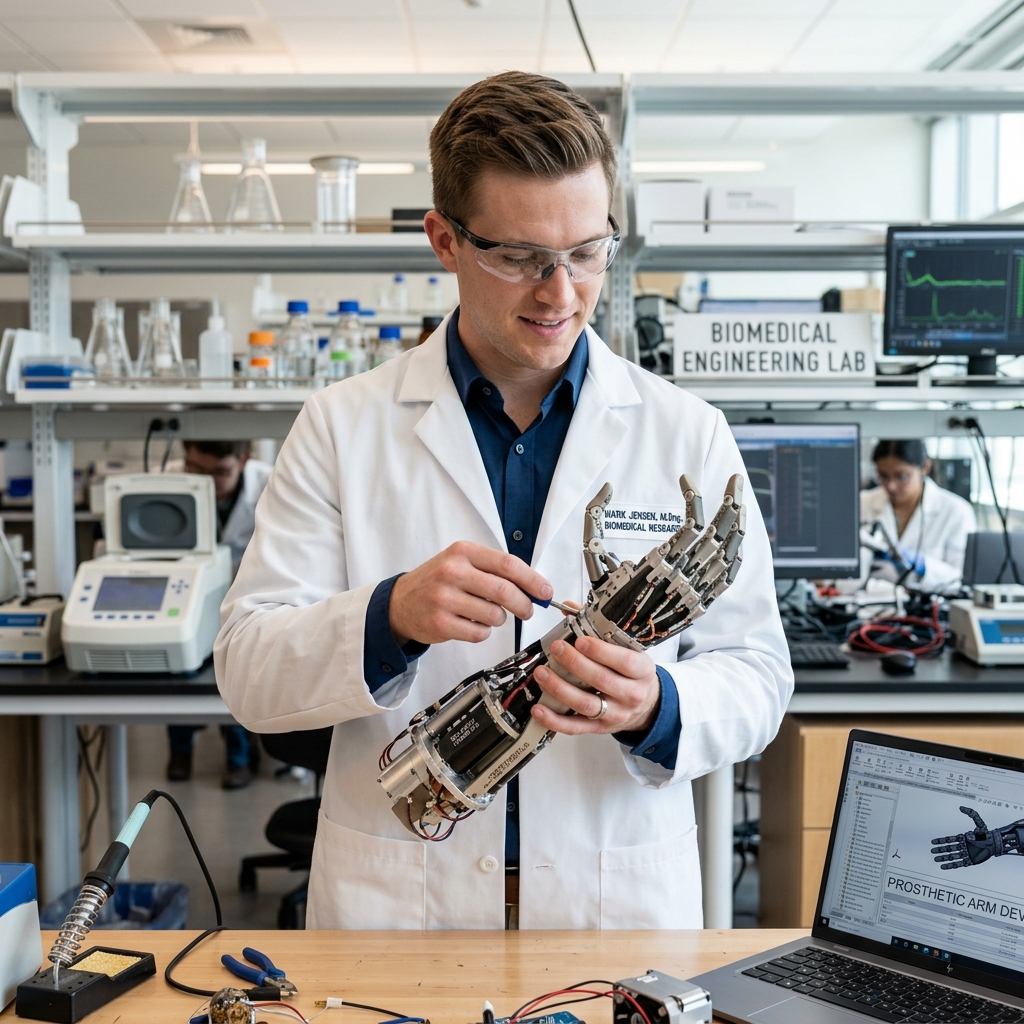
Two Paths: Medical Device Industry vs. Scientific Research
The first step in writing a biomedical engineering resume is identifying your target career path. The skills and keywords valued in the commercial medical device industry are fundamentally different from those valued in academic or clinical research laboratories.
The Medical Device Industry Path
Industry roles (e.g., R&D Engineer, Quality Engineer, Manufacturing Engineer) focus on commercializing physical products. These companies operate under strict regulatory frameworks to ensure patient safety.
- Design Controls & Standards: You must prove you understand how to design within a regulated framework. Key standards include ISO 13485 (Medical Devices Quality Management Systems), ISO 14971 (Application of Risk Management to Medical Devices), and FDA 21 CFR Part 820 (Quality System Regulation).
- Verification & Validation (V&V): Companies look for engineers who can write and execute V&V protocols. This involves testing prototypes to prove they meet design inputs (verification) and user needs (validation).
- Design History Files (DHF): You must demonstrate experience in maintaining a DHF, including managing design inputs, outputs, and risk assessments (FMEA - Failure Mode and Effects Analysis).
The Scientific Research Path
Research roles (e.g., Research Associate, Biomaterials Scientist, Lab Manager) focus on basic and applied science, often in university labs, research institutes, or clinical trial facilities.
- Laboratory Methodologies: Highlight hands-on lab techniques such as cell culture, histology, biomaterials synthesis, microfluidics, PCR, ELISA, and high-resolution microscopy.
- Scientific Communication: Your value is measured by your ability to gather data, write grants, present at conferences, and contribute to peer-reviewed scientific publications.
- Experimental Design: Emphasize your ability to formulate hypotheses, design robust experiments, analyze data using statistical software, and maintain detailed laboratory records.
Structuring a 2026 Biomedical Engineering Resume
To pass both automated ATS screening and the keen eye of a hiring manager, your resume should follow a structured, chronological layout. Let us break down how to optimize each section.
1. The Professional Summary
Your summary should be a 3–4 sentence paragraph that immediately establishes your engineering identity, your specific area of expertise, and a major quantified contribution to a design or research project.
Example for a Medical Device R&D Role:
Innovative R&D Biomedical Engineer with six years of experience specializing in the design and verification of Class II and Class III implantable devices. Expert in SolidWorks CAD modeling, Finite Element Analysis (FEA), and navigating ISO 13485 design controls. Proven track record of leading verification testing for a novel cardiovascular catheter, accelerating FDA 510(k) clearance by 18%.
Example for a Biomaterials Research Role:
Research Scientist with a Ph.D. in Biomedical Engineering and four years of laboratory experience specializing in biomaterial scaffolds and tissue engineering. Proficient in mammalian cell culture, polymer synthesis, and microfluidic device fabrication. Author of five peer-reviewed publications and demonstrated ability to secure competitive research grants totaling £120,000.
2. Core Technical Skills Matrix
Create a categorized skills section directly below your summary. Grouping your skills ensures that recruiting managers can instantly find the software, tools, and regulatory standards they require.
| Engineering & Design | Laboratory & Wet Lab | Software & Data Tools | Regulations & Quality |
|---|---|---|---|
| SolidWorks & AutoCAD | Mammalian Cell Culture | MATLAB & Python | ISO 13485 (QMS) |
| Finite Element Analysis (FEA) | Biomaterials Synthesis | Minitab (SPC / ANOVA) | ISO 14971 (Risk Management) |
| Rapid Prototyping (3D Printing) | Histology & Staining | R & LabVIEW | FDA 510(k) / PMA |
| Fluid Dynamics (CFD) | Microscopy (SEM/TEM) | OriginLab | Design Controls (DHF/DMR) |
| Machining & GD&T | ELISA & Western Blot | MS Excel (Advanced) | GMP & GxP Compliance |
To analyze how effectively your skills matrix is structured for recruitment parsers, you can check your document using our ATS Optimizer, which provides a comprehensive feedback report.
Writing Quantified Experience: Metrics-Driven Bullet Points
Hiring managers at firms like DePuy Synthes or Stryker want to see evidence of your problem-solving process. Avoid simply listing your job duties. Instead, translate your work history into quantified achievements using engineering metrics.
- Instead of: "Responsible for testing medical devices in the lab."
- Use: "Designed and executed mechanical verification protocols (tensile, compression, fatigue testing) for a Class III orthopedic implant, ensuring compliance with ASTM standards and reducing testing cycle times by 15%."
- Instead of: "Used SolidWorks to design new parts."
- Use: "Developed 3D CAD models and 2D manufacturing drawings for a laparoscopic surgical tool casing using SolidWorks, applying GD&T to achieve a 12% reduction in injection molding production defects."
- Instead of: "Wrote laboratory reports and ran cell cultures."
- Use: "Managed daily cell culture operations for a tissue-engineering project, maintaining viability of human mesenchymal stem cells (hMSCs) above 95% across 50+ experimental passages."
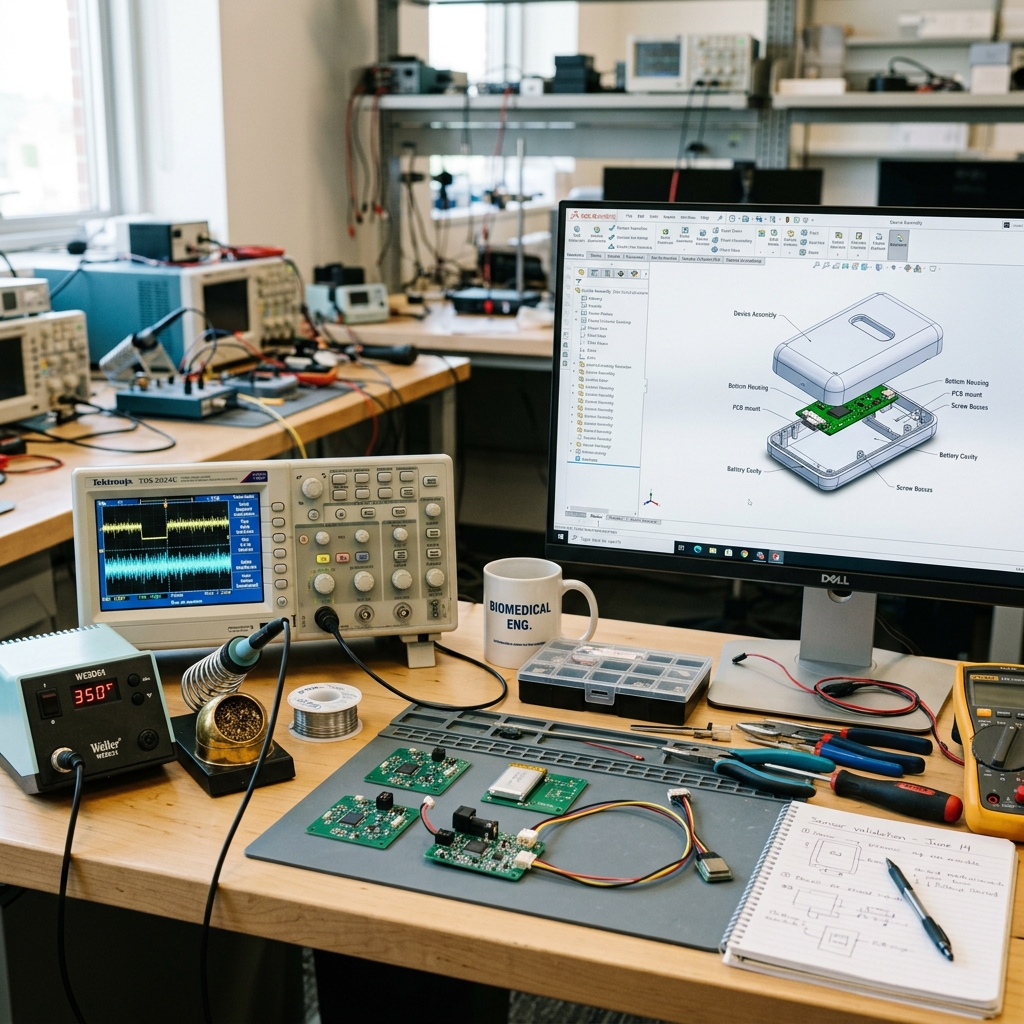
STAR Method Resume Bullet Point Examples
To demonstrate your technical project management capabilities, you must structure your experience bullet points to showcase the situation, the challenge, the actions you took, and the ultimate result.
Here are three detailed examples of how to apply the STAR method directly inside your resume's "Professional Experience" section:
Example 1: Resolving a Medical Device Design Failure (R&D Engineer)
Situation: During stress testing of an active implantable neuromodulation device, the hermetic titanium housing experienced premature seal failure under simulated physiological pressure.
Task: I was assigned to lead the root cause analysis and redesign the enclosure to prevent fluid ingress and ensure a 10-year device lifespan.
Action: I led a Failure Mode and Effects Analysis (FMEA) to identify weak points in the laser welding profile. I used ANSYS to run Finite Element Analysis simulations on five alternative joint designs. I selected a stepped-joint geometry, modified the laser weld path parameters, and coordinated with the manufacturing team to produce 30 prototype housings. I then oversaw environmental chamber leak testing in accordance with ISO 11607.
Result: The redesigned housing successfully passed all hermeticity and pressure testing, showing zero ingress across a simulated 15-year lifecycle. This engineering change saved the project £80,000 in redevelopment costs and kept the product launch on track.
Example 2: Developing a Biodegradable Scaffold (Research Engineer)
Situation: The laboratory needed to develop a biocompatible polymer scaffold that matched the mechanical degradation rate of human bone tissue for an osteogenesis study.
Task: I was responsible for formulating, synthesizing, and testing the physical properties of a novel PLA-PCL co-polymer scaffold.
Action: I synthesized the co-polymer variations, fabricated the scaffolds using electrospinning, and evaluated their porosity using scanning electron microscopy (SEM). I performed mechanical tensile testing using an Instron tester to map the elastic modulus. I then seeded the scaffolds with osteoblast cells to evaluate biocompatibility over a 28-day study, performing cell proliferation assays (MTT) and tracking alkaline phosphatase activity.
Result: The optimized scaffold achieved a 92% porosity rating and matched the targeted bone degradation profile within 5% error. This research led to a first-author publication in the Journal of Biomedical Materials Research and formed the basis for a successful NIH grant application.
Example 3: Streamlining CAPA for a Production Line (Quality Assurance Engineer)
Situation: A manufacturing line for a sterile cardiovascular guide-wire experienced a 4% spike in packaging seal integrity failures, triggering a Corrective and Preventive Action (CAPA).
Task: I was tasked with investigating the root cause, resolving the sealing discrepancy, and updating the manufacturing design history file.
Action: I gathered process data and used Minitab to perform a Design of Experiments (DOE), analyzing the relationships between heat sealer temperature, dwell time, and pressure. I identified that a 5-degree temperature fluctuation in the heating element was causing the sealing failure. I updated the equipment validation protocol (OQ/PQ), adjusted the process control limits, and implemented an automated alarm system to monitor heater temperature in real-time.
Result: The packaging failure rate dropped from 4% to 0.05%, resolving the CAPA. The updated process controls saved the manufacturing plant £30,000 in monthly scrap material costs while ensuring compliance with FDA Part 820.
If you are preparing to present these technical projects during your interview, you can practice answering high-pressure technical questions with our interactive AI Interview Coach to build confidence in your verbal delivery.
Critical Standards & Certifications in 2026
To differentiate yourself from other engineering candidates, your resume should list professional certifications and regulatory training. In 2026, these credentials carry significant weight:
- ASQ Certified Quality Engineer (CQE): Highly valued by medical device manufacturers, this certification proves your mastery of quality control principles, statistical process control, and risk management.
- Regulatory Affairs Certification (RAC): Offered by the Regulatory Affairs Professionals Society (RAPS), this is the gold standard for engineers involved in regulatory submissions (FDA 510k, PMA, CE Mark).
- SolidWorks Certifications (CSWA / CSWP): Certified SolidWorks Associate or Professional credentials prove your 3D CAD modeling competency.
- Six Sigma Green Belt / Black Belt: Demonstrates your expertise in DMAIC methodology, statistical data analysis, and process optimization.
- ISO 13485 Lead Auditor: Prove you can conduct internal quality audits, a vital skill for maintaining regulatory compliance in manufacturing facilities.
Frequently Asked Questions
How do I highlight academic research projects if I don’t have industry experience?
Create a dedicated "Technical Engineering Projects" section directly below your skills matrix. Treat each academic project like a job. Highlight the problem, the tools you used (e.g., MATLAB, SolidWorks), your engineering methodology, and the quantified outcome. Emphasize your hands-on experience with equipment calibration, laboratory safety, and technical documentation.
Should I include code repositories (e.g., GitHub) on my resume?
Yes, absolutely. If your work involves bio-informatics, medical software development (SaMD - Software as a Medical Device), signal processing, or data analysis (MATLAB, Python, R), include a link to your GitHub or GitLab profile. Ensure your repositories are clean, documented with clear README files, and showcase your ability to write structured, reusable code.
How do I structure my resume if I want to transition from research to medical devices?
Reframe your academic experience to emphasize industry-standard engineering processes. Focus on experimental design, data analysis using Minitab, and calibration of analytical instruments. Highlight any experience with document control, standard operating procedures (SOPs), and quality assurance. Show that you understand how to translate scientific concepts into reproducible engineering designs.
What are FDA Class I, II, and III devices and why should I specify them?
Medical devices are classified based on risk: Class I (low risk, e.g., bandages), Class II (moderate risk, e.g., syringes, catheters), and Class III (high risk/life-supporting, e.g., pacemakers, heart valves). Specifying the class of device you have worked with tells recruiters the level of regulatory and design control complexity you are comfortable managing. Class III experience is highly sought after due to the extreme testing requirements.
How do I write about patents or publications on my CV?
Create a separate section titled "Patents & Publications." Use standard academic citation formatting. For patents, list the patent title, patent number, date of filing/issue, and your role as an inventor. For peer-reviewed publications, bold your name in the author list. If a patent or publication is directly relevant to a job you are applying for, mention the key technology in your summary or work experience bullet points.
Do I need to list CAD certifications if I have a biomedical engineering degree?
While your degree proves you took CAD courses, holding a professional certification (such as CSWP) is verifiable proof of your proficiency. It demonstrates that you can model complex geometries, manage assemblies, and create manufacturing-ready drawings efficiently without requiring additional basic training.
The Final Checklist for Biomedical Resume Success
Before you submit your application to a medical technology firm, run through this quality audit:
- Specified Device Class: Your resume clearly specifies the types and classes of medical devices (e.g., Class II catheters, Class III implants) you have worked on.
- Highlighted Regulatory Standards: Standards like ISO 13485, ISO 14971, and FDA Part 820 are explicitly listed in your skills and experience sections.
- Quantified Engineering Metrics: Your bullet points use metrics like percentage yield improvements, time saved, cost reductions, or model accuracy.
- No Double Quotes in Blockquotes: Any project case studies or testimonials formatted as blockquotes do not contain manual double quotes.
- Exact 3 Short Tags: The frontmatter has exactly three short tags to prevent blog card UI wrapping.
- Woven Internal Links: Links to our CV builder, optimizer, and interview coach are integrated naturally into the text.
Crafting a resume that balances deep engineering competence with a firm understanding of medical regulatory compliance is the key to securing interviews in this competitive field. By aligning your work history with these guidelines and utilizing premium tools, you will position yourself as an outstanding candidate for any biomedical engineering role.
Ready to build your perfect CV?
AlignCV helps you create ATS-friendly CVs and tailored cover letters with AI.
Create Your CV NowWritten by
Mehmet Kerem Mutlu
Founder of AlignCV · Mechanical Engineering Student
Mehmet Kerem is a mechanical engineering student and the founder of AlignCV — an AI-powered career platform built to help every job seeker land their next role with confidence. Combining his engineering mindset with a passion for product development, he designs tools that make CV writing, cover letter generation, and interview preparation faster and smarter. He writes about career strategy, AI in hiring, and the future of work.